Wednesday, April 8, 2015

Mean Mr. Dog Catcher

Mom keeps us inside a nice, fenced yard.  We are not allowed to run free around the neighborhood.  It's a big yard so we have lots of room to run and when it's hot, or cold, or raining, we have a pet door that leads into the heated and air-conditioned garage so we are out of the weather.

Unfortunately, that is not the case for many of the dogs in our neighborhood.  We watch them run up and down the road.  And we hope that the mean dog catcher doesn't get them.

Except, maybe the mean dog catcher isn't so mean.  Mom told me that next week (April 12-18) is National Animal Control Appreciation Week.  Why would you have a whole week to celebrate mean dog catchers?  That's just not right!  So Mom and I did some research.

The dog catcher that cruises the neighborhood rounding up all the stray dogs and hauling them off to the dog pound to be locked in cages until they are put to sleep pretty much only exists in cartoons.  Today's animal control officers work hard to ensure that animals in general, not just dogs, are safe.  Yes, they do still pick up strays that are roaming the neighborhood.  But when they do, they work hard to reunite them with their owners.  Sometimes these strays are injured and sick and the animal control officers will rescue them so they can receive the medical attention they need.  They also investigate cases of animal neglect and cruelty, and help educate the public about laws concerning pets.  They must really love us to do all this for us.  Especially when they can be bitten, or clawed, or scratched by the animals they are trying to help.  I hope they know we don't mean it.  We are just scared and maybe hurt.

So this week, instead of running from Mean Mr. Dog Catcher, ask your Mom and Dad to say thank you for helping to take care of us.  Mean Mr. Dog Catcher isn't so mean.  He's actually very nice! 


Sunday, March 29, 2015

April is Adopt a Greyhound Month

April is National Adopt-a-Greyhound Month and the need to place thousands of surplus greyhounds from southern racing states to adoptive homes in northern, non-racing states has never been greater. There’s a concentration of beautiful, ex-racing greyhounds in seven southern states (Alabama, Arkansas, Arizona, Florida, Iowa, Texas, and West Virginia) and a lack of adoptions in those states.  Most adoptions occur in the north and northeast portions of the country.

“Although many greyhound tracks have closed in recent years, the need to find homes for retired racing greyhounds has not diminished,” said President of The Greyhound Project Melissa Cook. “Greyhounds retiring from the 21 remaining tracks across the country, including 12 in Florida, are being cared for by adoption groups as they wait to be adopted into their permanent homes.”

“The need to move these dogs to non-racing states is critical, and costs associated with accomplishing this present a real challenge. National Adopt-a-Greyhound Month is a great time to welcome these wonderful Greyhounds into loving and permanent homes.”

National nonprofit The Greyhound Project is spreading the message of greyhound adoption awareness to ensure that 100 percent of these greyhounds find caring homes. The Greyhound Project works to support over 300 greyhound adoption groups nationwide. The charity also publishes Celebrating Greyhounds, an award-winning quarterly magazine written for greyhound adopters, owners, and supporters.
                     
About The Greyhound Project
Founded in 1992, The Greyhound Project is a volunteer, non-profit organization. The mission of The Greyhound Project is to promote the welfare and adoption of greyhounds by providing support and information to adoption organizations, adopters, and the public. Please visit The Greyhound Project for more information.

Tuesday, March 17, 2015

Adopt A Rescued Guinea Pig!

Did you know there are cute little furry friends called guinea pigs?  I had no idea - until I saw a one this weekend.  Mom knew what it was right away though.  She said she and her sisters each had a guinea pig when they were growing up.  She said they were easy to take care of and cute as could be.  She called hers Clover because he loved it when Mom brought him clover from the yard.

Mom got online to show me more about guinea pigs and you know what we discovered?  March is adopt a Rescued Guinea Pig Month!  I never knew guinea pigs needed help.  I have never seen one at our local shelters.  But after seeing how cute they are and learning about guinea pig rescues, I had to share.  All animals need happy, forever families, especially cute little fur babies like these! 

Guinea pigs make great pets, according to Mom.  She says they are very friendly and gentle.  She has been bitten by her dogs and her hamsters, clawed by her cats, and kicked by her horse, but her guinea pigs were always tame and easy to handle.  They are also easy to care for.  Mom kept hers in a cage with some hay and fresh water, food pellets, some fresh veggies, and of course, clover for Clover.  Mom says that all she had to do was keep them fed, supplied with fresh water, and a clean cage and that was it.  No walking, no bathing, no house-breaking.  How easy is that?  And as long as you don't put a mixed-sex pair in the same cage, you don't need to spay or neuter them. 

I don't understand why there would be a need for guinea pig rescues.  They seem almost as perfect a pet as me!  But an article by The Critter Connection, a guinea pig rescue in Connecticut, said guinea pig rescues are full of sweet little guinea pigs who have been abandoned outdoors, left behind in empty homes, seized by authorities in abuse/neglect/hoarding cases or, quite literally, thrown away. (Who could do such a thing?!) There are pigs who were surrendered because kids lost interest, adults lost jobs, families had to relocate or caretakers were overwhelmed by the costs and/or labor required for the proper care of this species.

Now that you are sold on owning a guinea pig, why not just buy one?  According to The Critter Connection, there are several advantages to adopting. Here are just a few:

Adoptable guinea pigs are correctly sexed. A rescue group won't send you home with a mixed-sex pair thinking you are instead leaving with a same-sex pair.

Adoptable guinea pigs have had top-notch care. Expert handlers know the subtle symptoms of a long list of illnesses and won't send a pig out if they have the slightest doubt about its current health.

No surprise pregnancies. A rescue group will not send a pregnant guinea pig home with an adopter. If an unspayed female pig comes into a rescue and volunteers know there's a good chance she'd been around an unneutered male, she'll be put on pregnancy watch as a precaution.

Rescue groups typically have guinea pigs of all ages. This means you're sure to find the right match, whether you have soft spot for seniors or would prefer to have full-grown guinea pigs for your kids.  As a senior citizen myself, I hope some of you will consider adopting an older guinea pig.  We boomers make great pets!

Rescue groups have bonded pairs of guinea pigs. So if you want two, you can find two who already get along great.

Rescue groups often know the personalities and temperaments of the guinea pigs in their care. Whether you're looking for a roommate for your single pig, want a pig that's not going to freak out when your English Sheepdog barks, or want a pig that's the quintessential couch potato, a rescue can help you find the one who fits.

A good rescue is not going to let you get in over your head. Their primary concern is the welfare of their animals, and they are strong defenders of and advocates for them. If they think potential adopters need further information and education, or think guinea pig care is going to be too much for an already overloaded household, they are going to have a diplomatic but firm heart-to-heart talk with you.

So if you're looking to bring guinea pigs into your home, please give a rescued animal a second chance. When you adopt guinea pigs, you help more than just the animals you take in.  Believe it or not, we found hundreds of adoption listings on Petfinder for guinea pigs across the U.S. And for every pig that's in a rescue, there's another one needing the same safe haven.

Monday, February 23, 2015

February 24 is World Spay Day

Every day, thousands of healthy dogs and cats are euthanized.  Every day!  Most of these animals would make perfectly good companions if given a chance at a home.  So why are they being killed?  Simply because there are so many homeless pets, animal shelters simply don’t have the space or resources to provide care or find homes for them all.  Those that aren't killed end up wandering the streets as strays.  Many of these will die from diseases, starvation, or abuse and cruelty.  I know because we have several cats at my house and every one of them was a stray that showed up at our house and Mom took them in and cared for them.  Some of them were ill.  Some of them were injured.  All of them were hungry and skinny.  But not all stray animals are lucky enough to find our house!


Spay/neuter is an effective and humane way to save animals’ lives. Spaying (for females) and neutering (for males) are common surgeries veterinarians perform to stop animals from having accidental, surplus litters. Mom had me neutered shortly after I came to live with her.  It didn't hurt and Mom bought me ice cream when she picked me up.  The hardest part was being alone at the vet all day.  An FDA-approved technique for dogs called zinc neutering, also performed by a veterinarian but administered by a shot, is now available in many places.  I think I might have preferred that to the surgery! 


Preventing litters reduces the number of animals for whom resources are not available.  Most people support spay/neuter, especially once they understand how it saves lives.   However, affordable services are out of reach for many pet owners, and funding is always needed to spay and neuter feral cats and stray dogs.


That's where you come in!  You can make a big difference for animals by participating in World Spay Day.  Learn where there are underserved areas in your community, and raise awareness for the need for services—or of the availability of existing resources.  I know there are several low-cost spay/neuter clinics right here in Northwest Arkansas.  I'll be sharing them on social media tomorrow!  You can too!  Use social media to spread the word about the power of spay/neuter.  Help raise critical funds to spay and neuter those animals most in need.


Support World Spay Day in your community.  Help reduce pet overpopulation.  Let's be sure that every pet has a home. 


Tuesday, February 17, 2015

Dog Training Education

I am a good dog.  I don't jump on people or pee in the house.  I don't bark or run out of the yard.  But I also don't like to walk on a leash.  I have a big back yard to run in.  Why would I want to wear a leash?  And I don't always sit when Mom tells me to.  So I guess I'm not a well-trained dog.  Mom used to have dogs like me that she took to shows and they were well-trained.  But I'm not a show dog.  I'm just for play.  So I guess it doesn't matter if I'm well-trained - does it?

Actually, it does.  I am not leash trained because I rarely leave our house except to go to the vet.  And then, Mom puts the leash on me, but she always carries me so I don't actually walk on the leash.  But she still trained me a little.  She taught me to go outside to do my business.  She taught me that it's not nice to jump on people.  She taught me not to run out in the road even though we live in the country and there isn't much traffic.  And she taught me to sit still for pictures and to wear the silly things she makes me wear without fussing.

Learning to do all this may sound like hard work.  You're right.  It was.  But it was also fun!  I got to spend special time with Mom and she would give me treats when I did things good.  Who doesn't like treats?!  And Mom and I have our own special friendship now that she doesn't have with Dad's dogs.

You might think you don't need to train your dog.  But even if he is like me and doesn't need lots of training, you should work with him.  We want to learn.  We are eager to please you.  We just need you to show us what you want us to do and how you want us to behave.  And teaching us to follow simple commands like "sit" and "stay" may actually help keep us safe.

There are lots of different theories on how to train your dog.  Mom said we aren't going to discuss all of them here.  She said she was more interested in the "why" instead of the "how."  Too many dogs are taken to shelters because their owners don't train them and then get mad at them when they don't behave.  But we are no different than your children.  You teach them right and wrong.  Why don't you teach us too? 

Some people think training should only consist of rewards and positive reinforcement.  Others say it is not only okay, but necessary, to discipline your dogs when the misbehave.  Mom has never hit me but then I am a good dog.  Regardless of what training method you choose, it is important to teach your dog how to behave properly for your household.  You must decide what behavior is desired and teach it to your dog.  For example, Mom has a friend who thinks we should not be allowed up on the furniture.  Her dog is trained to stay off the couch.  But Mom says the couch is for me to sit on and look out the window when she is not home.  She has a cover on it that protects it from getting dirty.  She does not care if I jump up there to sit or sleep.  In our house, that is acceptable behavior.

There are lots of places to learn how to train your dog.  So go to the library and get a book.  Buy a DVD.  Look online for information.  Enroll you and your dog in training classes.  But do train your dog in the basic things he needs to know.  You'll both be happier.


Monday, February 2, 2015

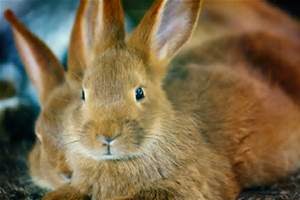
Adopt a Rescued Rabbit

You know that one of Bob's passions (yes, we dogs have passions!) was to help as many homeless animals as possible find the same type of happy home he had.   And in his memory, I have decided to carry on that mission.  While I do spend most of my time promoting dog and cat adoption, there are those Moms and Dads who just aren't cat or dog people. Hard to imagine, I know, but it's true. But I have a solution for them. How about a rabbit?

February is Adopt a Rescued Rabbit Month.  This is the time of year to get the word out about rabbits.  Why?  Easter is just a couple of months away.  And that means many people will be considering buying rabbits for Easter presents.  But often, these families don't know how to care for or interact with rabbits.  The kids grow tired of them, and the next thing you know the parents are dropping them off at already crowded shelters.  There are thousands of rabbits in shelters around the country waiting for homes; many of these rabbits were babies purchased as a whim during last year's Easter season.

I don't know much about pet rabbits. All the rabbits at my house are not pets. I see them hopping around in the field sometimes and I think it might be great fun to chase them but Mom won't let me. But The House Rabbit Society knows all about rabbits. They told me that rabbits can be wonderful indoor companions, get along with many other companion animals (including cats and dogs), are intelligent, affectionate and inquisitive, and can readily be trained to use a litter box. That's pretty smart. Even I don't know how to use the litter box! However, they can also be destructive. The ideal "rabbit person", in addition to being gentle, patient and eager to get to know a rabbit on his or her terms, must be willing to rabbit-proof their home to prevent destructive chewing. (See Mom - I'm not the only one who chews on things they're not supposed to).

Like the ASPCA, HRS says rabbits can and should be spayed and neutered - both for health reasons and also to help put an end to the animal overpopulation problem.

HRS also tries to teach people that rabbits are not always a good pet, especially for children. Even baby bunnies tend to be willful and independent, and do not enjoy being picked up and carried. HRS also cautions against buying or adopting a rabbit as a gift, or on impulse, as the novelty of having a new pet usually wears off. When a family realizes how much day-to-day work is involved, the rabbit is, unfortunately, often turned loose or surrendered to a shelter.

Also, this month, in honor of Adopt a Rescued Rabbit Month, for each purchase from the Travels with Bob shop, Mom make a donation to the Petfinder Foundation.  And if you purchase an "Adopt a Rabbit" themed product, she will also make a donation to the House Rabbit Society!

Make some bunny happy!  Adopt a rescued rabbit!

Sunday, January 4, 2015

January is Train Your Dog Month

Of all the dogs at Oak Valley, I am the only one that Mom actually paid money for.  The rest of our family came from various shelters. 

Mom expected some behavior problems from me when I first came home.  After all, I was only a few weeks old and didn't know any better.  But the dogs from the shelter were all much older.  You would expect they wouldn't be too much trouble.  Not so!  In some cases, they misbehaved worse than I did when I was a puppy! 

According to the Humane Society of the United States, between six and eight million dogs and cats are turned in to animal shelters each year, and about four million are euthanized for lack of good homes.  If the behavior of our shelter dogs is any indication, I can understand why!  Who wants a dog that isn't housebroken, or constantly chews things, or is too aggressive?  What is really sad is that most of these behavior problems could be solved with a little training and socializing.  Fortunately, Mom and Dad understand this and take the time to work with us.  Not all dogs are as fortunate.

Training doesn't have to elaborate to be effective.  All we need are the basics.  Almost any of us can learn to sit and stay.  And once we have learned to do this, we are less likely to jump on people or be a nuisance.  Now we can truly be part of the family!

Of course, if you want to teach us more, some of us are eager to learn.  We dogs can be taught to do all kinds of things.  Gypsy can dance.  Ginger used to herd.  Dusty was a hunter and pointer.  There are dogs that play Frisbee.  Mom and Bob even told me about dogs that can surf.  I don't do many tricks but I do know how to sit and stay.  I'm so cute, apparently that's enough to make Mom happy!

January is Train Your Dog Month.  That makes it the perfect time for dog parents to learn how to train their dogs.  There are lots of ways you can learn.  Books, DVDs, and even online videos are available.  Please remember that we want to learn so any training should be humane.  Most of us will do anything to please you for some praise and a small treat.

If you don't want to learn to train us yourself, you can always attend a training class or hire a professional trainer.  This will cost a bit more than doing it yourself, but takes less time than doing it yourself.  But the time spent training your dog personally will be time well-spent.  It will give you and your dog a chance to bond and play.  If you do hire a trainer, remember there is no certification required.  That means anyone can call themselves a dog trainer, even if they don't know what they are doing!

Take time to train your dog.  We'll be better behaved.  You'll be less stressed.  And we'll both live happily ever after.

For more information on dog training, contact the Association of Professional Dog Trainers, who have proclaimed January as Train Your Dog Month.